
Table of Contents
Introduction
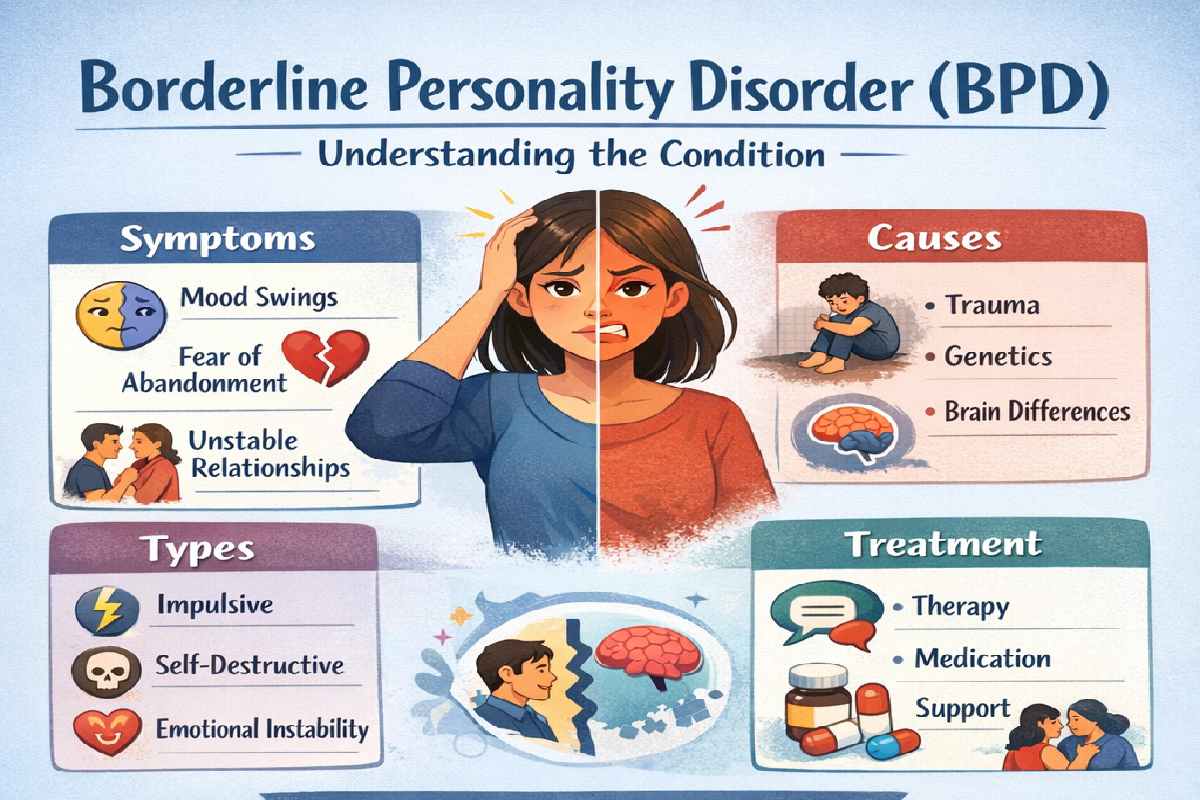
Borderline Personality Disorder (BPD) is a serious 0 condition that affects how a person thinks, feels, and relates to others. It can cause intense emotions, unstable relationships, and difficulty in controlling behavior. People with BPD often experience rapid mood swings, fear of abandonment, and challenges in maintaining a stable sense of identity.
Understanding BPD is important because early awareness and proper treatment can help individuals lead balanced and fulfilling lives. In this article, we will explore its overview, symptoms, causes, diagnosis, and treatment options in a simple and structured way.
What is Borderline Personality Disorder?
Borderline Personality Disorder is a type of personality disorder characterized by instability in moods, behavior, self-image, and relationships. These patterns can disrupt daily life, school, work, and social interactions.
People with BPD may feel emotions more intensely than others and may struggle to return to a stable emotional state. This condition usually begins in adolescence or early adulthood and can improve with proper care and support.
Overview – Borderline Personality Disorder
BPD is part of a group of personality disorders that involve dramatic and emotional behavior. It affects how a person views themselves and others.
Key points in the overview:
- Strong emotional reactions
- Fear of being alone or abandoned
- Unstable relationships
- Impulsive actions
- Difficulty managing anger
It is important to remember that BPD is treatable, and many people improve with therapy and support.
Specialist for Borderline Personality Disorder
| Specialist Type | Role |
| Psychiatrist | Diagnoses BPD and prescribes medication |
| Clinical Psychologist | Provides therapy and psychological assessments |
| Psychotherapist | Conducts counseling sessions |
| Social Worker | Helps with support systems and community resources |
| Mental Health Counselor | Guides emotional and behavioral management |
BPD Specialist Doctors & Clinics Worldwide
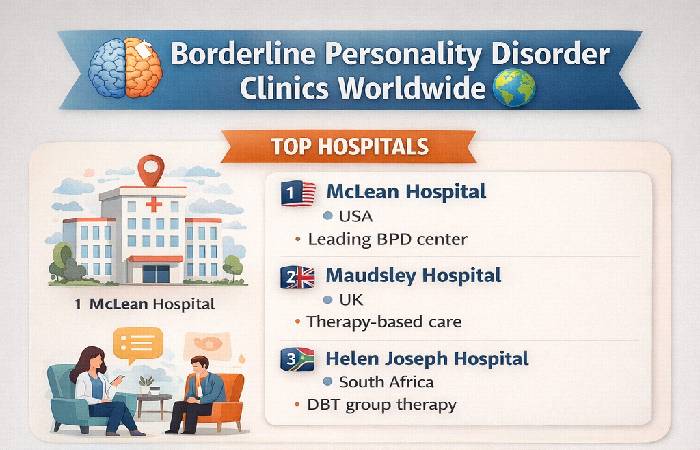
1. McLean Hospital
- Location: USA
- Known for: Advanced treatment programs for personality disorders
- Special Feature: Dedicated BPD treatment programs
- Why famous: One of the world’s leading psychiatric hospitals with research-based care
2. Maudsley Hospital
- Location: London, UK
- Known for: World-class psychiatric services
- Special Feature: Strong focus on therapy-based treatments like CBT & DBT
- Reputation: Globally respected mental health institution
3. Manipal Hospitals
- Location: India
- Known for: Full psychiatric care (inpatient + outpatient)
- Services: Personality disorders, anxiety, depression
- Strength: Multidisciplinary mental health teams
Top Specialized BPD Clinics (UK & Europe)
4. Ciconia Recovery London
- Specialty: Psychiatry & addiction + personality disorders
- Approach: Evidence-based, patient-centered care
- Focus: Emotional and behavioral disorders
5. London Psychiatry Clinic
- Team: 20+ mental health experts
- Services: Diagnosis, therapy, psychiatric reports
- Experience: 100+ years combined expertise
6. Flint Healthcare
- Specialty: Complex mental disorders including personality disorders
- Treatment: Holistic psychiatric + psychological care
- Strength: Personalized treatment plans
7. Atrom Mindcare Holistic Psychiatric Clinic
- Services: Therapy, psychiatric assessment, modern treatments
- Special Feature: Non-invasive therapies like rTMS
- Focus: Personality and mood disorders
Online & Global Access Clinics
8. Online Psychiatry
- Mode: Online consultations worldwide
- Services: Diagnosis + therapy
- Advantage: Quick appointments (24–48 hours)
Top BPD Specialists in India
9. Dr Rajesh Ayyalasomayajula
- Experience: 25+ years
- Specialty: Personality disorders, emotional disorders
10. Dr Priyanka Banokar Pande
- Experience: 12+ years
- Specialty: Psychiatric and emotional health
11. Dr Siva Anoop Yella
- Experience: 5+ years
- Specialty: Mental health and personality disorders
Worldwide Consultation Fees
| Region | Psychiatrist Fee | Therapy Session |
| USA | $150 – $400 | $100 – $300 |
| UK | £100 – £350 | £80 – £250 |
| India | ₹300 – ₹2,000 | ₹500 – ₹2,500 |
| Online (Global) | $50 – $200 | $40 – $150 |
Symptoms of Borderline Personality Disorder (BPD)
| Symptom | Description |
| Emotional instability | Rapid mood swings lasting hours or days |
| Fear of abandonment | Extreme worry about being left alone |
| Unstable relationships | Intense but short-lived relationships |
| Impulsive behavior | Risky actions without thinking |
| Identity disturbance | Unclear or changing self-image |
| Anger issues | Difficulty controlling anger |
| Feeling empty | Chronic sense of emptiness |
| Stress-related paranoia | Temporary suspicious thoughts |
Borderline Personality Disorder Types
Although BPD is one diagnosis, experts sometimes describe different patterns:
| Type | Description |
| Impulsive Type | Acts quickly without thinking about consequences |
| Discouraged Type | Feels dependent and fears rejection |
| Petulant Type | Shows anger and moodiness |
| Self-destructive Type | Engages in harmful or risky behaviors |
Causes – Borderline Personality Disorder
| Cause | Explanation |
| Genetics | Family history of mental illness may increase risk |
| Brain structure | Differences in areas controlling emotions |
| Environmental factors | Childhood trauma or neglect |
| Social factors | Stressful relationships or unstable upbringing |
| Psychological factors | Low self-esteem or negative thinking patterns |
BPD usually develops due to a combination of these factors rather than a single cause.
Diagnosis – Borderline Personality Disorder
Diagnosing BPD requires a mental health professional. There is no single test, but evaluation includes:
- Detailed discussion of symptoms
- Medical and family history
- Psychological assessment
- Observation of behavior patterns
Doctors use criteria from standard diagnostic manuals to confirm the condition. Early diagnosis can help in starting effective treatment.
What Age does BPD Start?
| Age Group | Likelihood | Explanation |
| Childhood (below 12 years) | Rare | Symptoms are usually not diagnosed at this stage because personality is still developing |
| Early Adolescence (13–15 years) | Possible | Early signs like emotional instability and behavior issues may begin |
| Late Adolescence (16–18 years) | Common | Symptoms become clearer, especially mood swings and relationship problems |
| Early Adulthood (18–25 years) | Most Common | BPD is usually diagnosed during this stage |
| Adulthood (25+ years) | Less common onset | Symptoms may continue, but new diagnosis is less frequent |
Borderline Personality Disorder Treatments
| Treatment Type | Description |
| Psychotherapy (Talk Therapy) | Main treatment; helps manage emotions and behavior |
| Dialectical Behavior Therapy (DBT) | Special therapy designed for BPD |
| Cognitive Behavioral Therapy (CBT) | Helps change negative thinking patterns |
| Medications | Used to treat symptoms like mood swings or anxiety |
| Group Therapy | Encourages sharing and learning from others |
| Family Therapy | Improves communication within families |
Treatment is most effective when it combines therapy, support, and sometimes medication.
Borderline Personality Disorder vs Bipolar Disorder
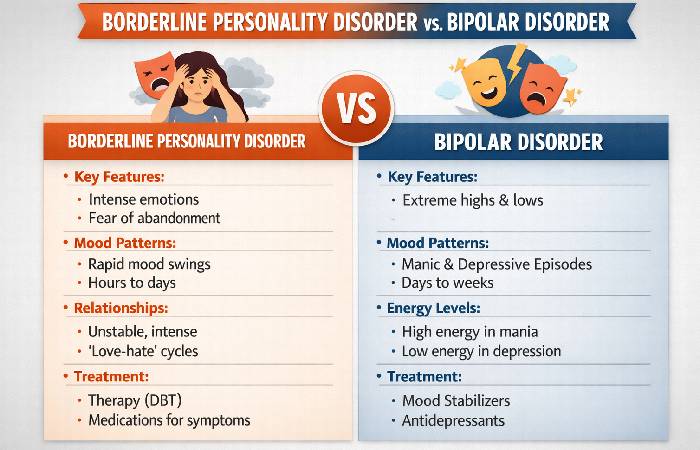
| Feature | BPD | Bipolar Disorder |
| Mood changes | Rapid and triggered by events | Long-lasting mood episodes |
| Duration | Hours to days | Days to months |
| Cause | Personality pattern | Mood disorder |
| Relationships | Highly unstable | Less affected |
| Treatment focus | Therapy-based | Medication + therapy |
Although both involve mood changes, they are different conditions and require different treatment approaches.
Conclusion
Borderline Personality Disorder is a complex but manageable mental health condition. It affects emotions, behavior, and relationships, but with proper understanding and treatment, individuals can improve significantly. Early support, therapy, and a strong support system play a key role in recovery.
Awareness and empathy are essential when dealing with BPD, as people experiencing it need understanding rather than judgment.
FAQs
- Can Borderline Personality Disorder be cured?
BPD may not have a complete “cure,” but symptoms can be effectively managed with treatment. - At what age does BPD start?
It usually begins in adolescence or early adulthood. - Is BPD the same as bipolar disorder?
No, they are different conditions with different causes and treatments. - Can people with BPD live a normal life?
Yes, with proper therapy and support, many people live stable and successful lives. - What is the best treatment for BPD?
Dialectical Behavior Therapy (DBT) is considered one of the most effective treatments.