
You may be surprised by that number — especially if you always saw singing bowls as a spiritual oddity rather than a wellness device with measurable impacts. Yet, more and more peer-reviewed studies seem to be confirming something that sound healers have known for thousands of years — mindful exposure to certain sound frequencies can produce real, quantifiable changes in how the body deals with stress. This article debunks the fuzz and uniquely analyses what the science actually states. We will delve into how sound therapy stress relief science works at a physiological level, we will walk through the main findings from published studies, rebut some common myths and discuss what all of this means for you, if you are looking to reduce stress and improve your wellbeing.
No exaggerated claims. No mysticism. Only the evidence — and what it means in practice.
Table of Contents
How Sound Therapy Affects the Body: The Physiological Pathway
Before learning how singing bowls help to relieve stress, you should understand what stress does from the body side. Anytime we sense a threat — be it an urgent work deadline, an unwelcome conversation, or simply that chronic low-level worry in the background — the hypothalamic-pituitary-adrenal (HPA) axis activates and surfaces stress hormones to course through our bodies, primarily cortisol and adrenaline. Heart rate climbs. Muscles tighten. Breathing shallows. Digestion slows.
This is the fight-or-flight response. But when it stays constantly activated — as for millions of modern life-dodgers — it’s a risk factor for anxiety attacks, sleeplessness, hypertension and immune dysfunction.
The mechanism by which sound therapy works is to stimulate the other pathway: The parasympathetic nervous system, otherwise known as rest-and-digest response. Here is how:
Auditory Stimulation and the Vagus Nerve
The vagus is also the longest cranial nerve, and it reaches all the way from your brain stem down to your gut! It aids the working of the parasympathetic nervous system, and it has an extreme response to hearing stimulants. The ideal kind of sound for stimulating vagal tone (those languorous, rhythmic, harmonically rich sounds of which you hear a tune in one of those singing bowls) lowers the heart rate and muscle tension and takes us out of a state activated by stress.
Brainwave Frequency and the Relaxation Response
Sustained tones similar to the ones produced with singing bowls (between 110 Hz and 660 Hz depending on the size of the bowl) are connected to brainwave entrainment. This is called the preference of neural synchrony with respect to external periodic stimuli. The brain runs on mostly high-frequency beta waves under anxiety. One of the theories around singing bowls is that these slow steady tones encourage our brains to shift into alpha waves (calm, present awareness) and theta waves (deep relaxation, “pre-sleep”).
This is not some fringe claim — brainwave entrainment is an extensively documented neurological phenomenon, studied in contexts ranging from sleep medicine to pain management.
Vibrational Resonance in Tissue
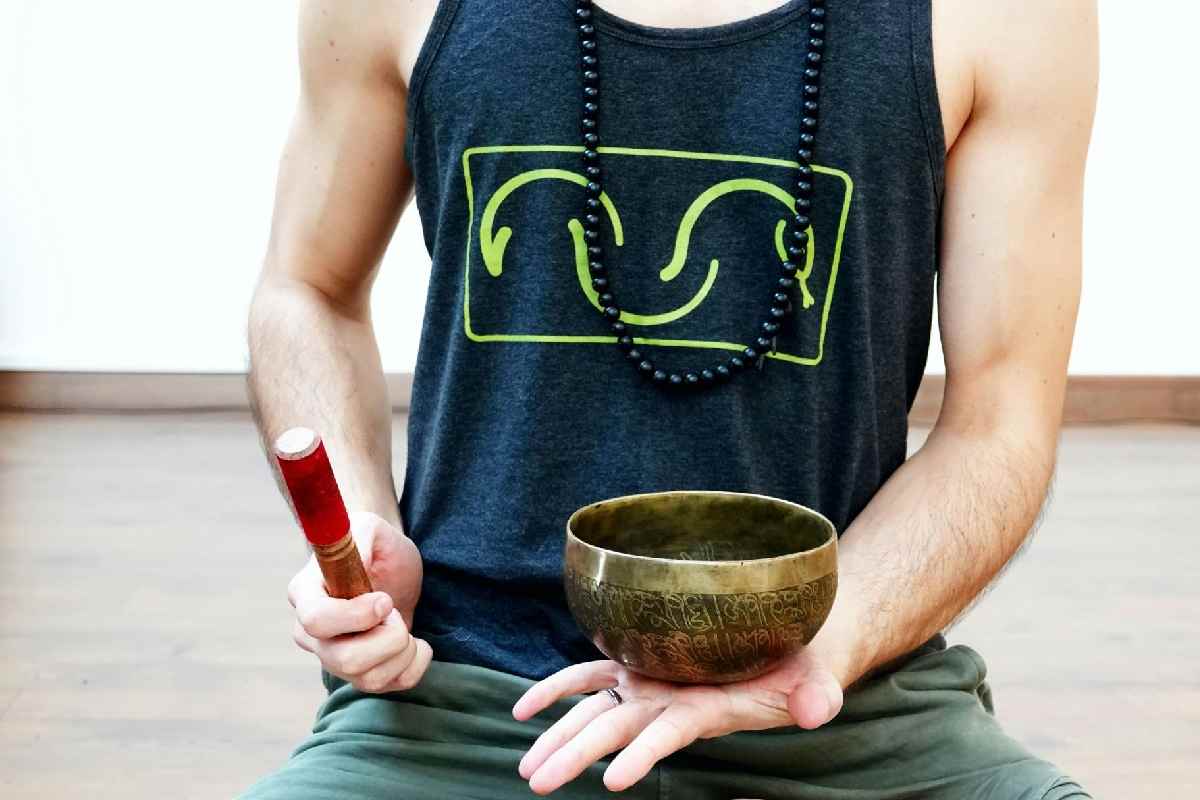
Since the human body is primarily water and since water easily transmits energy, this suggests that the actual vibration created by singing bowls extends beyond hearing. Most therapeutic music bowls are placed on or near the body allowing their vibrations to travel through soft tissue directly.Researchers speculate it may assist relieve physical tension stored in the muscles and fascia, but research is still at an early stage and further clinical trials are needed to gain answers.
What the Research Actually Shows
Instead of just picking individual studies, it is better to examine the wider pattern in publications. A few relevant studies done to understand this are compiled in the table below:
| Publication | Study Focus | Key Finding |
| Journal of Evidence-Based Integrative Medicine | Singing bowl meditation | Reduced tension, anxiety & physical pain |
| Explore: Journal of Science & Healing | Sound bath sessions (n=51) | Improved mood, lower fatigue, less pain |
| American Journal of Health Promotion | Tibetan bowl relaxation | Significantly reduced systolic blood pressure |
| Frontiers in Psychology | Music & sound therapy | Decreased cortisol (stress hormone) levels |
Some caveats on understanding this study: The large majority of previous studies have been done in relatively few people and very few reproducible at population scale. The scientific community should be rightfully skeptical, and those in the field write repeatedly for more well-controlled trials. Nevertheless, even if evidence for the direction is consistent — and no adverse effects are observed — practicing a singing bowl offers a low-risk option to examine in addition to more conventional stress management strategies.
Separating Fact From Fiction: 3 Common Myths About Sound Therapy
Myth 1: “It Only Works If You Believe In It”
Sound, and therefore sound therapy is simply placebo – this is one of the most widespread objections. Although placebo effects are powerful in their own respect and clinically relevant, numerous studies have sought to control for expectation bias. Blood pressure and heart rate variability are physiological markers of the stimuli, not its belief. Singing bowl studies have shown measurable changes in these markers, but researchers accept this assertion is still not proven beyond placebo without more blinded trials.
Myth 2: “You Need a Long Session to See Any Benefit”
Research does not support this. One session produced statistically significant improvements in mood, fatigue and pain —reported an article in Explore: Journal of Science & Healing. Nonetheless, the subjects in each of these studies stated that they felt calmer and less anxious after a 20-minute session. Even just a few minutes of focused daily practice in addition to your normal routine seems to have incremental benefits over time particularly for stress relief, and since this is something you can fit into existing routines this is accessible even for those people who lead busy lives.
Myth 3: “It Is Only for People Into Spirituality or New Age Practices”
However, the clinical implementation of sound therapy presents a different story. In the US and Europe, sound-based interventions have been integrated into patient care programs in integrative medicine departments from several major hospitals — including for cancer recovery, chronic pain management, and pre-operative anxiety. These settings are evidence-driven. The business people, most of whom have never played any interest in spirituality, and its related practices before the maturing field is largely one with selling success.
Where Sound Therapy Is Being Used Today
The clinical and wellness applications of sound therapy have expanded significantly over the past decade. Here is where it is showing up:
- Sound sessions in integrative oncology units designed for pre-treatment anxiety and chemotherapy-related distress
- Wellness programs at companies looking for an evidence-based alternative to traditional stress management training
- Rehabilitation, given that the non-verbal, sensory properties of sound work well in supporting patients struggling with talk-based therapies
- Sleep clinics where sound therapy is meant to be tested as non-pharmacological methods for treating insomnia due to chronic stress
- In schools and universities, where short sound sessions are being tested out during exam periods to reduce student anxiety.
This breadth of applicability demonstrates an increased awareness that sound therapy is not a niche activity–it is an all-around, low cost and non-invasive option suitable for use in a wide range of contexts where stress and wellness are concerned.
What This Means for Your Stress Management
Understanding science is valuable. Nonetheless, such wisdom only matters insomuch as it can be acted upon. What does this research mean in real life for a person out there running the day to day hands on stress?
This means that when you feel overwhelmed, grabbing a singing bowl is not wishful thinking —it is an evidence-informed choice. There is a real physiological pathway from sound to relaxation and research supports utilizing it as one component of a larger approach to stress management.
Second, that it takes more than intensity; it takes consistency. You can be equipped without fancy gear, lengthy sessions. Ten minutes of attentive listening, practiced daily with a single quality bowl is sufficient enough for the nervous system baseline response to stress to change over time.
Third, that means this functions best as an adjunctive strategy to guiding rest (quality sleep), movement, nutrition and professional support when needed vs. a free-standing solution. Sound therapy is one of the useful tools in the toolbox, not the whole tool box.
If you feel ready to explore this practice further and have the science of reputable publishers at your back, using already established sound healing practices may empower your experimentation with proper methods & instruments—allowing you to do so in a safe & truly meaningful way.
Conclusion: Ancient Wisdom, Modern Evidence
Singing bowls have long been used for healing and meditation. For decades, their value was realized through experience — sensed rather than quantified. What is changing is that science is starting to catch up, offering a basis in human physiology for what practitioners and their clients have observed anecdotally for ages.
There is still some data to be gathered. There does need to be further research, and responsible proponents of sound therapy will always remind us that there is. What we do have, however, is consistently clear direction from well-designed preclinical and clinical studies: sound therapy and stress relief are indeed related; singing bowls are some of the most accessible, affordable and scientifically researched methods for utilizing that relationship.
As a researcher, as a healthcare professional, or as simply another human trying to find a way of taking care of the stress that comes from life itself — the science provides you with a base on which to investigate this practice with confidence (and without guilt).